
 Energy Transition
Lithium for electric mobility
10/22/2026 - 09.00 AM
Energy TransitionThe rapid growth of electric mobility is turning lithium from a strategic raw material into a critical factor shaping the future of the automotive industry. As more electric vehicles take to the roads, demand for batteries continues to rise, increasing the need for a supply chain capable of delivering sufficient quantities of lithium, refined and processed into battery-grade materials, to meet market requirements.
But the challenge goes beyond production volumes. Battery technologies are evolving rapidly: chemistries are changing, some are becoming less reliant on materials such as nickel and cobalt, and alternatives such as LFP (Lithium Iron Phosphate) batteries are gaining ground. Yet one element remains essential to the main battery technologies used in electric vehicles today: lithium.
This makes it impossible to consider the challenge in terms of extraction alone. The expansion of the EV market is placing increasing importance on the entire value chain, from raw material extraction and refining to the production of battery-grade precursors and the recovery of lithium from end-of-life batteries. Throughout this chain, technologies such as electrochemical lithium refining can help make industrial processes more efficient, scalable and circular.
The connection between electric vehicle adoption and battery demand is becoming increasingly clear. According to the International Energy Agency (IEA), global EV battery deployment reached 1.2 TWh in 2025, almost 30% more than the previous year and over seven times the level recorded in 2020. Electric vehicles accounted for more than 70% of global battery deployment, with passenger cars and other light-duty vehicles representing over 85% of EV battery demand.
And the market is still far from reaching its full potential. Under the IEA's STEPS (Stated Policies Scenario), which takes into account policies already announced by governments, EV battery deployment could reach almost 3 TWh by 2030 and approach 5 TWh by 2035.
This expansion has direct implications for raw material requirements. IRENA identifies lithium, graphite, nickel, manganese, copper, phosphorus and cobalt among the materials needed to manufacture EV batteries, highlighting the substantial growth in their supply chains required to support electric vehicle adoption.
The challenge, therefore, is not simply to manufacture more batteries. The expansion of electric mobility must be matched by greater industrial capacity across the entire battery value chain, from raw materials and active materials through to cell manufacturing.
This is where lithium occupies a particularly important position. Regardless of how the balance between battery chemistries evolves, it remains an essential component of the leading lithium-ion technologies currently used in electric mobility.
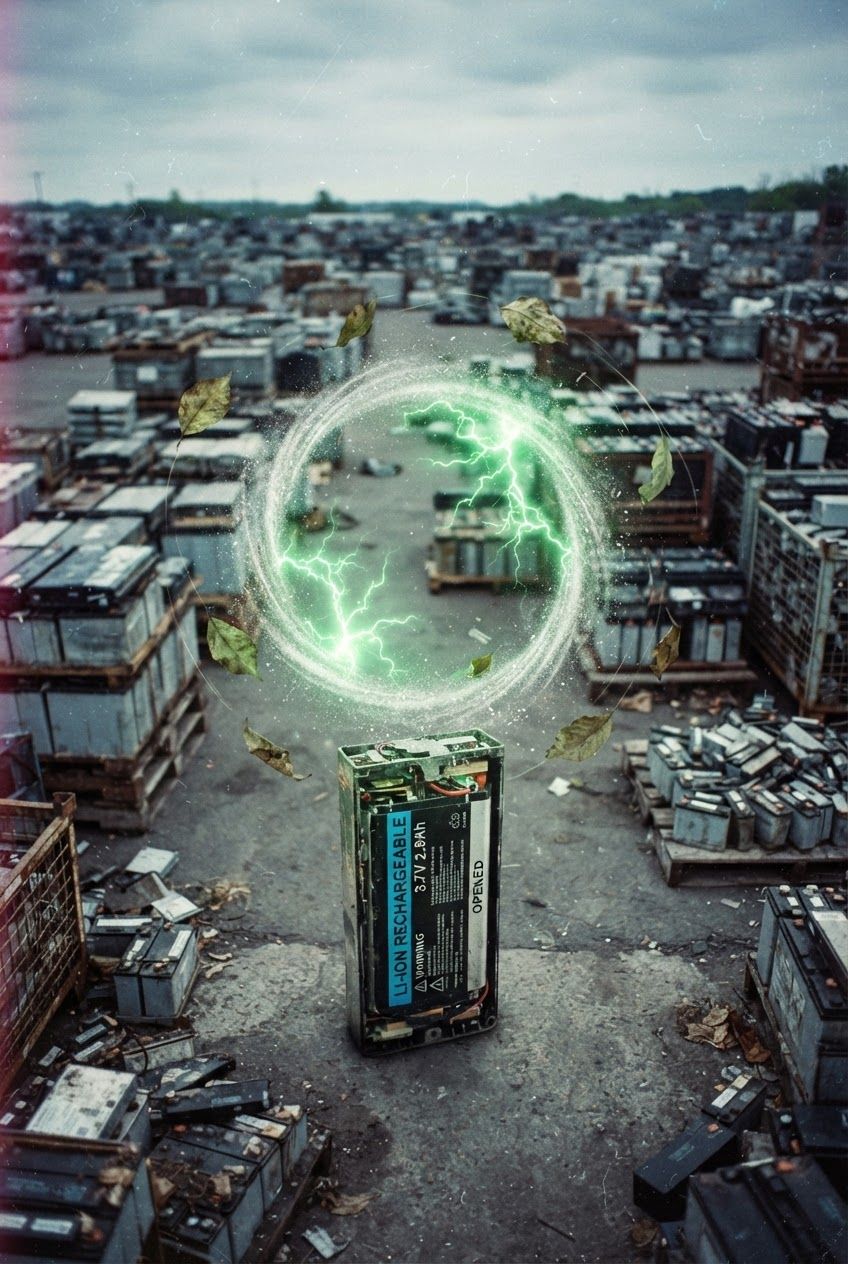
EV batteries depend on a combination of materials rather than a single element. A battery pack contains multiple components, and cathode composition can vary considerably between technologies. Nevertheless, lithium remains the common denominator across the main battery chemistries on the market today.
This helps explain why projections for lithium demand are particularly significant. According to the IEA's Global Critical Minerals Outlook 2026, lithium is expected to experience the strongest demand growth among the critical minerals analysed. Under the STEPS scenario, global lithium demand is projected to more than triple by 2040, driven primarily by electric vehicles and battery energy storage systems.
That does not mean the way lithium is used will remain unchanged. Continued advances in battery technology are reshaping demand for other materials, as well as for the different lithium compounds required throughout the supply chain.
Two of the main precursors are lithium carbonate (Li₂CO₃) and lithium hydroxide (LiOH). As discussed in our previous articles on lithium refining, lithium hydroxide is particularly important for nickel-rich cathode chemistries. It is also of particular interest to De Nora because it can be produced directly through the electrochemical conversion of salts such as lithium chloride and lithium sulphate.
The future of electric mobility must therefore be considered alongside developments in battery chemistry. Different technologies require different materials in varying proportions, influencing the industrial processes needed to produce battery-grade precursors.
Discover our Salt Splitting Solutions
One of the most significant developments in recent years has been the rise of LFP (Lithium Iron Phosphate) batteries. This chemistry does not use nickel or cobalt in its cathode and offers advantages in terms of cost, safety and lifespan. Although LFP batteries have traditionally had a lower energy density than nickel-rich alternatives, technological advances have steadily narrowed the gap.
As early as 2024, IRENA reported that LFP's share of the passenger EV battery market had risen from negligible levels in 2015 to approximately 44% in 2023, with improvements in energy density helping to broaden its range of applications.
This trend has continued. According to the IEA, LFP batteries have gained further ground in the EV market, while advances in battery technology are gradually reducing reliance on some of the more expensive materials or those exposed to volatile prices.
However, NMC (Nickel Manganese Cobalt) and NCA (Nickel Cobalt Aluminium) chemistries remain important for applications requiring higher energy density and performance, particularly where driving range and the amount of energy stored relative to battery weight are key considerations.
This diversification also has implications for the lithium supply chain. Lithium carbonate is widely used in LFP chemistries, while lithium hydroxide is an important precursor for nickel-rich batteries.
There is, therefore, no single type of "EV battery", nor a uniform demand for battery materials. Technologies, battery pack sizes and market segments all vary. As IRENA points out, projections for critical material demand also depend on how battery chemistries evolve and on the average capacity of batteries installed in vehicles.
What remains unchanged, at least within today's technological landscape, is lithium's essential role. Competition between battery chemistries primarily affects how lithium needs to be processed and which compounds must be supplied to battery manufacturers.
Having access to lithium resources does not automatically mean having the materials needed to manufacture batteries. Between a mineral deposit or lithium-containing brine and an EV battery cell lies a complex industrial chain: extraction, concentration, refining, conversion into battery-grade materials, active material production and, finally, cell manufacturing.
The resilience of this supply chain has become a strategic industrial priority.
The IEA highlights the continued geographical concentration of critical mineral supply chains. For lithium, the challenge extends beyond mining to refining: processing capacity remains concentrated in a limited number of countries, while projected demand growth makes it increasingly important to diversify production and processing capabilities.
This is particularly relevant for Europe. The European Commission's Joint Research Centre notes that the EU still has limited domestic supplies of raw and processed battery materials. Strengthening this part of the supply chain is therefore essential to improving the competitiveness of Europe's battery industry.
This intermediate stage of the value chain is where De Nora makes its contribution. The company neither extracts lithium nor manufactures battery cells. Instead, it applies its electrochemical expertise to the conversion of lithium salts into battery-grade lithium hydroxide.
Its Enso platform, developed for salt splitting applications, can convert lithium chloride or lithium sulphate into LiOH through an electrochemical process. The technology aims to simplify certain conventional refining routes, reduce chemical reagent consumption and recover value from selected process streams.
In a rapidly expanding EV market, securing supplies is therefore not simply a question of how much lithium will be available, but also where and how it can be processed into the materials required by the battery industry.
Electric mobility and circularity: lithium beyond a battery's first life
The growth of electric mobility raises another important question: what will happen to the lithium contained in EV batteries when they reach the end of their useful life?
In the short term, recycling cannot replace substantial volumes of primary raw materials. This is largely a matter of timing: many of the batteries installed during the recent expansion of electric mobility will remain in service for years. As a result, the volume of materials available from end-of-life batteries will increase some time after the growth in EV sales.
Over the longer term, however, recycling could play a much greater role. According to the IEA, secondary supply could double its contribution across the main energy-related critical minerals by 2040. Lithium and nickel currently have relatively low recycling rates, but both are expected to see rapid growth.
For lithium, this means that primary resources could increasingly be complemented by a secondary source: materials already in circulation within the battery system.
Here too, the challenge goes beyond collecting and dismantling used batteries. Lithium recovered from battery materials must be separated, refined and brought back to a quality suitable for new battery-grade applications. Electrochemical refining can also play a role in these recycling routes. In projects involving De Nora, for example, lithium sulphate streams obtained from battery processing can be converted back into lithium hydroxide through electrolysis.
The growth of electric mobility is therefore making not only lithium itself strategically important, but also the entire industrial cycle surrounding it: extracting, processing, using and ultimately recovering it.
As the number of electric vehicles on the roads continues to rise, the ability to manage each of these stages effectively will become increasingly important to the competitiveness and sustainability of future mobility.
European Commission – JRC, Battery Technology in the European Union: 2025 Status Report

Via Leonardo Bistolfi, 35
20134 Milan Italy
+39 02 21291
industriedenora@denora.com
For the dissemination and storage of Regulated Information, Industrie De Nora S.p.A. has chosen to make use of the 1INFO system (www.1info.it), managed by Computershare S.p.A. having its registered office in Milan, via Lorenzo Mascheroni 19, and authorized by CONSOB.
Copyright © 2009/2026 Industrie De Nora S.p.A.
Share capital € 18.268.203,90 Fully paid up - Company registration number MI / VAT 03998870962 - REA number MI - 1717984