
 Energy Transition
Lithium and energy storage: batteries for the grids of the future
10/29/2026 - 09.00 AM
Energy TransitionGenerating more electricity from solar and wind power is not enough. As the share of renewable energy in the electricity mix increases, grids must also be able to manage when electricity is generated and when it is needed. This is where energy storage is playing an increasingly important role.
Battery Energy Storage Systems (BESS) can store electricity when it is plentiful and release it when needed, helping to balance the power system and integrate variable renewable sources such as solar and wind. Today, the expansion of battery storage is closely linked to lithium-ion battery technology.
Lithium is therefore strategically important not only for electric mobility. It is also becoming increasingly relevant to another essential part of the energy transition: the electricity grids of the future.
Solar and wind power differ from conventional dispatchable generation in one fundamental way: their output depends on the availability of sunlight and wind. A solar power plant may generate large amounts of electricity in the middle of the day, while demand peaks in the evening. Similarly, wind power generation can fluctuate significantly within just a few hours.
As renewable capacity expands, power system flexibility becomes increasingly important. This means being able to adjust generation, consumption and storage quickly in response to changing grid conditions.
According to the International Energy Agency (IEA), supporting rapid growth in solar and wind power in line with global climate goals would require worldwide energy storage capacity to increase approximately sixfold by 2030, reaching 1,500 GW. Under the IEA's Net Zero Emissions scenario, batteries would account for around 90% of this growth, reaching 1,200 GW of installed capacity. (Source: IEA, Batteries and Secure Energy Transitions, 2024).
Storage does not replace renewable generation; it makes renewables easier to integrate into the electricity grid. By storing electricity when generation exceeds demand, energy can be made available several hours later, reducing waste and imbalances while making better use of renewable power.

A BESS is much more than a large battery that stores electricity. It can provide several services to the power system, often simultaneously.
One of the most important is energy shifting: electricity is stored when supply is plentiful or demand is low, then released when the system needs it most. According to IRENA, this application accounted for approximately 68% of newly installed battery storage capacity in 2024. (Source: IRENA, Renewable Power Generation Costs in 2024).
Batteries can also support peak shaving, reducing periods of peak demand, and frequency regulation, responding rapidly to help maintain grid frequency. They can provide balancing services, capacity and grid support and, in some cases, reduce or defer the need for new infrastructure investments.
Their rapid response capability is one of their main advantages. The IEA identifies battery storage as one of the most versatile solutions for providing short-term flexibility. In 2024 alone, approximately 63 GW of new utility-scale battery storage was installed worldwide, bringing total capacity to around 124 GW. In the same year, battery storage project costs fell by approximately 40%. (Source: IEA, Electricity 2026).
The long-term decline in costs is even more striking. According to IRENA, the total installed cost of utility-scale BESS fell by 93% between 2010 and 2024, from USD 2,571 to USD 192 per kWh.
These economic developments are transforming battery storage from a complementary technology into an integral part of electricity grid infrastructure.
Discover our solutions for Salt Splitting
Energy storage technologies are not all alike, nor do they serve the same needs. Several solutions are available for long-duration storage, but for applications requiring storage over a few hours, lithium-ion batteries have become dominant thanks to their combination of efficiency, rapid response, modularity and steadily declining costs.
However, stationary storage has different priorities from electric vehicles.
In an electric vehicle, weight, volume and energy density are critical parameters: a lighter, more compact battery can increase driving range without adding excessive weight. In a stationary installation, these constraints are generally less demanding. Instead, cost, safety, thermal stability, service life and the number of charge-discharge cycles become particularly important.
This is one reason why LFP (Lithium Iron Phosphate) batteries have become central to BESS applications. IRENA identifies lithium-ion batteries, particularly LFP chemistries, as the dominant technology in utility-scale installations.
This shift also has implications for the battery materials supply chain. LFP batteries do not use nickel or cobalt in their cathodes, but they still require lithium. Changes in battery chemistry can therefore significantly alter demand for certain critical minerals without reducing lithium's central importance.
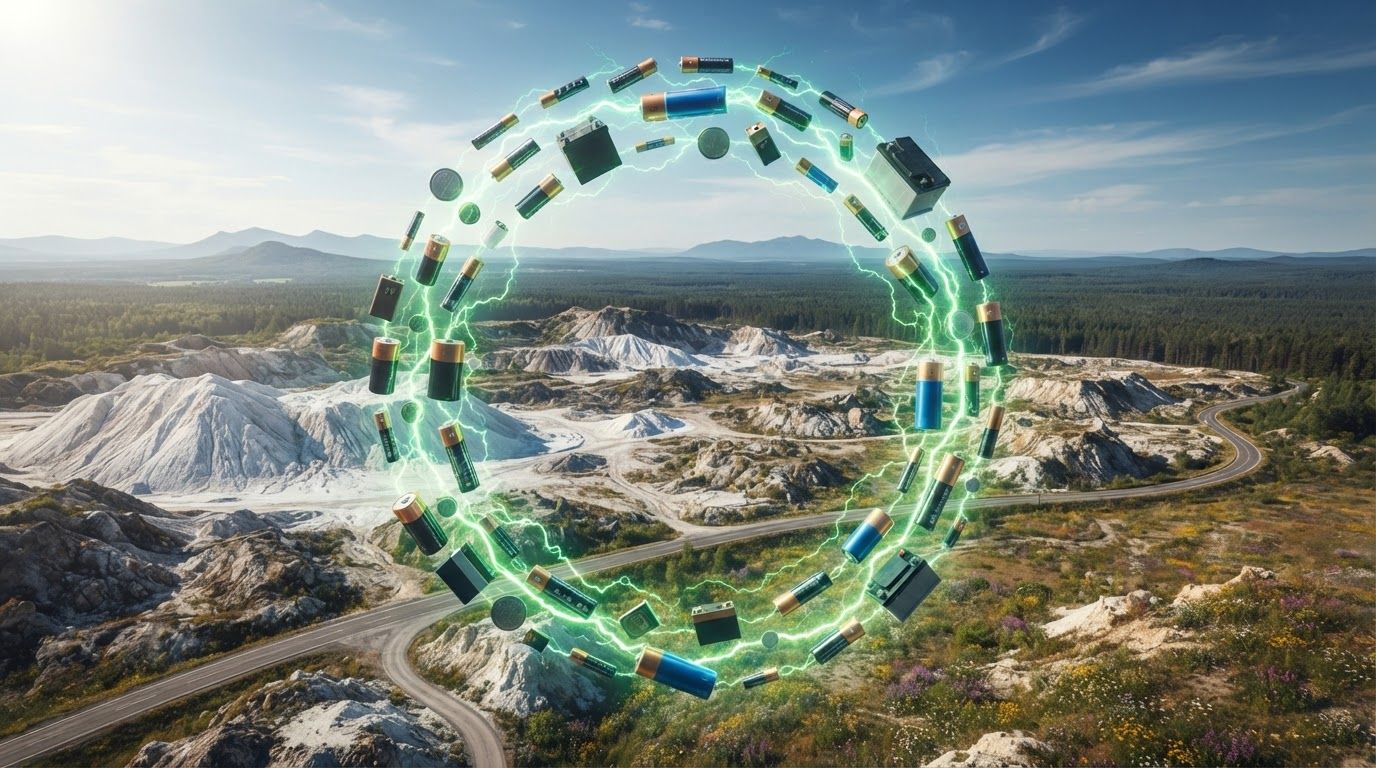
The growth of BESS raises a challenge that goes beyond the number of batteries installed. Rising demand for storage requires a supply chain capable of converting extracted lithium into materials suitable for battery production, using reliable and scalable industrial processes.
This is where De Nora makes its contribution.
Through its Enso electrolyser platform, De Nora applies electrochemical salt splitting to convert salts such as lithium chloride and lithium sulphate into lithium hydroxide. This electrochemical route aims to simplify certain conventional processes by reducing intermediate steps, reagent consumption and waste streams, while enabling the recovery of useful by-products.
The relationship between different lithium compounds is particularly relevant to the energy storage market. LFP batteries primarily use lithium carbonate, whereas De Nora's electrochemical technology directly produces lithium hydroxide (LiOH). However, if produced competitively, lithium hydroxide can also serve as an intermediate for lithium carbonate production through a subsequent carbonation process.
Over the longer term, growth in primary production will also need to be complemented by the recovery of lithium from end-of-life batteries. The same refining technologies can help recover value from lithium-containing streams generated by battery recycling, bringing the material back into the production cycle.
Energy storage therefore highlights another dimension of lithium's importance to the energy transition. Beyond powering millions of electric vehicles, lithium batteries can help make electricity grids more flexible, resilient and capable of integrating growing volumes of renewable energy.
The challenge will consequently extend beyond installing more BESS. It will also mean building a lithium supply chain capable of delivering the materials required at industrial scale and, increasingly, keeping those materials in circulation.

Via Leonardo Bistolfi, 35
20134 Milan Italy
+39 02 21291
industriedenora@denora.com
For the dissemination and storage of Regulated Information, Industrie De Nora S.p.A. has chosen to make use of the 1INFO system (www.1info.it), managed by Computershare S.p.A. having its registered office in Milan, via Lorenzo Mascheroni 19, and authorized by CONSOB.
Copyright © 2009/2026 Industrie De Nora S.p.A.
Share capital € 18.268.203,90 Fully paid up - Company registration number MI / VAT 03998870962 - REA number MI - 1717984